





PLanning and Operations

Planning and operations for agile, cost-effective supply chains.

Accurate demand planning and effective S&OP are essential for efficient, responsive supply chains. At Trace Consultants, we help organisations implement advanced planning frameworks and systems that improve forecast accuracy, optimise inventory, and enable genuine cross-functional collaboration.

Blurred view of a warehouse shelf filled with stacked cardboard boxes and products, showcasing organized storage.

Why supply chain operations planning matters.

Demand patterns shift rapidly, inventory costs squeeze margins, and siloed decision-making creates inefficiency. Without robust supply chain operations planning and cross-functional alignment, organisations struggle with stockouts, excess inventory, and forecasts that don't reflect reality.

Strong S&OP and demand planning turn uncertainty into advantage. With structured frameworks and advanced systems, organisations improve forecast accuracy, optimise working capital, and make decisions with confidence.

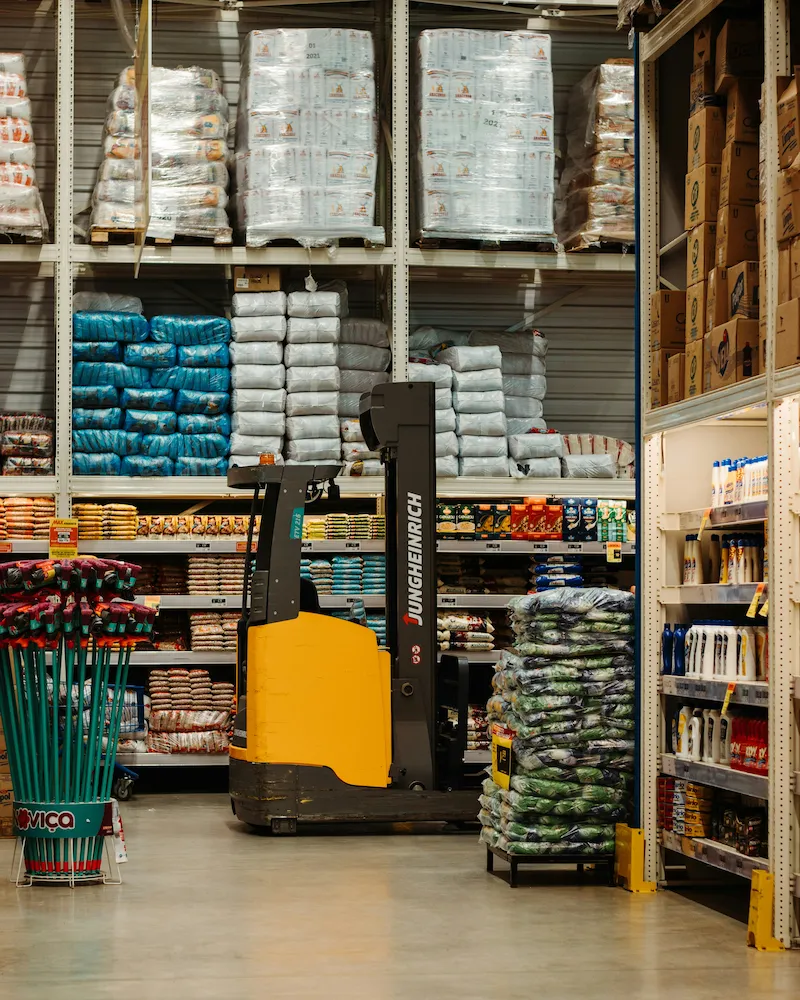
A warehouse aisle featuring a yellow forklift, stacked goods on shelves, and various products displayed on either side.

Ways we can help

Flow

Improve forecast accuracy

We implement AI-driven forecasting models and robust demand planning processes that reduce uncertainty and align supply with actual market demand.

Supplier performance

Reduce excess inventory costs

We help optimise inventory levels through better demand-supply balancing, freeing up cash while maintaining service levels.

Supply chain technology

Align teams across functions

We design S&OP and IBP frameworks that break down silos between sales, operations, and finance, enabling aligned decision-making.

Supply chain sustainability

Increase supply chain agility

We implement Advanced Planning Systems and digital tools that give organisations the capability to sense and respond to demand changes faster than ever.

Employee efficiency

Optimise MRO supply chains

We help asset-intensive industries balance spare parts availability with cost, reducing downtime through predictive maintenance planning and smarter procurement.

Core service offerings

What our planning and operations service covers:

We bring expertise across demand planning, advanced planning systems, S&OP/IBP process design, and MRO supply chain optimisation. Our work connects forecasting accuracy to operational reality, ensuring plans that work on the ground, not just on paper.

Demand Planning and Forecasting Strategy

Effective demand planning ensures the right inventory availability, production schedules, and supply chain responsiveness. We help businesses move beyond spreadsheet-driven forecasting to implement advanced, data-led approaches.

What we deliver:

  • AI-driven forecasting models to improve demand accuracy
  • Optimised forecasting techniques (statistical, causal, machine learning)
  • Improved collaboration between sales, operations, and supply chain teams
  • Integration of demand planning into broader S&OP and IBP processes
  • Reduction of bias and improved forecast reliability

Advanced Planning Systems (APS) Selection and Implementation

Many businesses struggle with manual, disconnected planning tools that limit forecasting accuracy and supply chain performance. We assist organisations in selecting and implementing APS solutions tailored to their needs.

What we deliver:

  • Selection and implementation of APS solutions aligned to business requirements
  • Integration with ERP, WMS, and TMS systems for real-time visibility
  • Automated supply chain decision-making using AI-driven planning tools
  • Demand-supply balancing through digital twin modelling
  • Ongoing optimisation and capability uplift

Sales & Operations Planning (S&OP) Transformation

An effective S&OP process bridges the gap between supply chain, finance, and commercial functions, ensuring alignment between demand, supply, and financial goals. We help businesses implement structured frameworks that drive real collaboration.

What we deliver:

  • Structured S&OP frameworks for end-to-end visibility
  • Enhanced scenario planning to respond to demand shifts faster
  • Integration with financial planning for revenue and margin optimisation
  • S&OP best practices and decision-making cadence
  • Cross-functional governance and accountability structures

Integrated Business Planning (IBP) Implementation

IBP elevates S&OP by fully integrating financial, commercial, and operational planning into a single, strategic framework. We help organisations align strategy, finance, and operations for cohesive decision-making.

What we deliver:

  • IBP framework development aligning strategy, finance, and operations
  • Implementation of digital IBP platforms for real-time scenario modelling
  • Cross-functional accountability for financial and operational goals
  • Automated data collection and reporting for faster decision-making
  • Long-term capacity and capability planning integration

MRO (Maintenance, Repair and Operations) Supply Chain Optimisation

MRO supply chains are critical for asset-intensive industries. Many organisations struggle with excessive spare parts inventory, unplanned downtime, and inefficient procurement. We help businesses optimise MRO planning and execution.

What we deliver:

  • MRO inventory management optimisation to balance availability and cost
  • AI-driven predictive maintenance planning to reduce asset downtime
  • Improved MRO procurement strategies and supplier performance
  • Integration of MRO planning with demand forecasting and IBP processes
  • Spare parts categorisation and criticality analysis

Frequently Asked Questions

Common questions about planning and operations.

Ask another question

What's the difference between demand planning, S&OP, and IBP?

Demand planning focuses on forecasting customer demand. S&OP brings together supply chain, sales, and operations to balance demand and supply. IBP extends S&OP to include financial planning and strategic alignment, creating a fully integrated planning process.

Do we need an Advanced Planning System, or can we use spreadsheets?

Spreadsheets work for simple operations, but as complexity grows, they become error-prone and time-consuming. APS solutions provide automation, scenario modelling, and real-time visibility that manual processes can't match. We help assess whether the investment is justified for your business.

What's the biggest challenge in demand planning?

The most common challenges are forecast bias (consistent over or under-forecasting), siloed decision-making, and poor data quality. Addressing these requires both better processes and better collaboration across sales, operations, and finance.

How do you measure success in planning and operations?

Success is measured through improved forecast accuracy, reduced inventory carrying costs, better service levels, and enhanced collaboration. We establish clear KPIs at the start of every engagement to track progress and demonstrate value.

Can you help implement planning technology, not just design processes?

Yes. Unlike traditional advisory firms, we support end-to-end implementation, including technology selection, configuration, integration with existing systems, and capability uplift to ensure your teams can use the tools effectively.

Insights and resources

Latest insights on planning and operations.

Planning, Forecasting, S&OP and IBP

S&OP That Actually Works in Australia

Most Australian businesses have an S&OP process. Very few have one that works. This article names the failure modes and sets out what it takes to fix them.

S&OP That Actually Works: A Practical Guide for Australian Businesses

Most Australian businesses that have a sales and operations planning process will tell you it is working. Most of them are wrong.

The symptoms are familiar. The monthly S&OP meeting runs. Slides are presented. Numbers are reviewed. And then the business goes back to making decisions the same way it made them before the process existed: through bilateral conversations between sales and supply chain, through reactive adjustments when the forecast misses, and through escalations that should never have needed to be escalated.

S&OP is one of the most widely implemented and most consistently underperforming business processes in Australian FMCG, retail and manufacturing. It is also, when done properly, one of the most valuable. The difference between a functioning S&OP process and a broken one shows up directly in forecast accuracy, inventory levels, service performance, working capital efficiency and margin.

This article names the failure modes honestly and sets out what a functioning S&OP process actually looks like, not in theory, but in practice, in Australian businesses operating under real cost pressure, real supply volatility and real organisational complexity.

What S&OP Is Actually Supposed to Do

Before diagnosing why S&OP fails, it is worth being precise about what it is designed to do, because a significant proportion of the process failures in Australian businesses stem from a misunderstanding of the purpose.

S&OP is a decision-making process, not a reporting process.

Its purpose is to produce agreed decisions about how the business will respond to the current gap between supply and demand over the planning horizon. Those decisions might include adjusting a production plan to accommodate a customer volume commitment, choosing to build inventory in advance of a promotional period, resolving a capacity constraint that will affect service levels in two months, or making a trade-off between a higher-cost supply option and a service level risk.

The key word in that description is decisions. An S&OP meeting where no decisions are made is not an S&OP meeting. It is a reporting meeting with an S&OP label on it. And that distinction matters, because most of the failure modes in Australian S&OP processes come down to the process producing reports rather than decisions.

The Five Failure Modes

After working across dozens of S&OP processes in Australian FMCG, retail, manufacturing and distribution businesses, the same failure modes recur. They are not mysterious. They are structural, and they are fixable.

1. No Single Demand Signal

The most common starting problem. Sales has a number. Marketing has a different number. Finance has a budget. Supply chain has a statistical forecast. The S&OP process is supposed to reconcile these into a consensus demand plan. In practice, in most organisations, it does not. Each function continues to work from its own version of demand, and the supply chain team ends up making inventory and production decisions based on a forecast that nobody else has genuinely committed to.

The fix is not more data. It is a single, agreed demand signal with a clear ownership point (usually a demand planning function or the commercial team, depending on the business model) and a defined cutoff for changes. Once the demand number is locked for the planning cycle, it stays locked. Adjustments are handled through the exception process, not through bilateral renegotiation.

2. No Real Trade-Off Decisions

S&OP exists to make trade-offs visible and to resolve them. Should we prioritise service to Customer A at the expense of Customer B during a capacity constraint? Should we build inventory ahead of the promotional window and accept the working capital cost? Should we accept a lower margin on an order that fills idle capacity?

In many Australian S&OP processes, these trade-offs are never surfaced. The meeting reviews the numbers, notes the risks, and moves on. The trade-offs get resolved informally, usually by whichever function has the most organisational power or the most vocal leader. That is not planning. That is politics.

A functioning S&OP process forces trade-offs onto the table with explicit options, quantified consequences and a decision framework. If the meeting ends without resolving the top three trade-offs, the process has failed for that cycle.

3. The Wrong People in the Room

S&OP is a cross-functional decision-making process. It requires the authority to make decisions that affect sales, operations, supply chain and finance simultaneously. If the people in the room do not have that authority, the meeting becomes an information-sharing session and the real decisions get made elsewhere.

The S&OP executive review (the final step in the monthly cycle) needs to be attended by the managing director or general manager and the heads of each relevant function. If those people delegate down, the process loses its power. This is one of the most common and most damaging failure modes in mid-market Australian businesses: the S&OP meeting is run by the supply chain team and attended by mid-level representatives from other functions who cannot commit their teams to decisions.

4. No Accountability Between Cycles

A decision made in the S&OP meeting that is not tracked and executed between meetings is worthless. And in many organisations, that is exactly what happens. The meeting produces actions. Nobody follows up. By the next cycle, the same issues reappear because the actions from the previous cycle were never completed.

The fix is simple in concept and hard in practice. Every S&OP cycle starts with a review of the actions from the previous cycle. Did the production plan adjustment happen? Was the inventory build executed? Did procurement secure the alternative supply source? If the answer is no, the meeting addresses why before moving forward. Without this accountability loop, S&OP is a monthly conversation that changes nothing.

5. Planning Horizon Is Too Short

S&OP is supposed to operate over a rolling 12 to 18 month horizon. In practice, most Australian S&OP processes spend 80 percent of their time on the next four to six weeks. The conversation is dominated by immediate operational firefighting: what is shipping this week, what is the current service level, what orders are at risk.

Those are important questions. They belong in a weekly operational review, not in S&OP. The monthly S&OP process should be looking at months three through eighteen: where are the demand trends heading, what capacity constraints are emerging, what supply risks are developing, what commercial decisions need to be made now to shape outcomes in six months.

When S&OP collapses into a short-term operational review, the business loses its ability to plan ahead. Every decision becomes reactive. Inventory builds because nobody saw the demand change coming. Service fails because nobody anticipated the capacity constraint. Margins erode because nobody made the sourcing decision early enough to preserve optionality.

What a Functioning S&OP Cadence Looks Like

A well-designed S&OP process runs on a monthly cycle with five distinct steps. Each step has a clear owner, a defined output and a handoff to the next step.

Step 1: Data gathering and statistical forecast (Week 1). The demand planning function produces an unconstrained statistical forecast based on historical data, adjusted for known events (promotions, ranging changes, seasonality). This is the starting point, not the answer.

Step 2: Demand review (Week 2). The commercial team (sales, marketing, category) reviews the statistical forecast and overlays commercial intelligence: customer commitments, pipeline changes, promotional plans, market dynamics. The output is a consensus demand plan, owned by the commercial function.

Step 3: Supply review (Week 2-3). The supply chain and operations teams assess whether the demand plan can be fulfilled within current capacity, inventory and supply constraints. Where it cannot, they identify the gaps and develop options: overtime, additional shifts, alternative suppliers, inventory pre-builds, or demand shaping (pushing volume earlier or later). Each option has a cost and a risk profile attached.

Step 4: Pre-S&OP reconciliation (Week 3). The demand and supply views are brought together and the trade-offs are identified and quantified. A small cross-functional team (typically the heads of demand planning, supply planning and finance) prepares the decisions that need to be made, with options and recommendations. This is the step that most processes skip or underinvest in, and it is the step that determines whether the executive review is productive.

Step 5: Executive S&OP review (Week 4). The senior leadership team reviews the reconciled plan, makes the trade-off decisions, approves the operating plan for the next cycle, and reviews actions from the previous cycle. This meeting should take 60 to 90 minutes. If it takes three hours, the pre-work was not done properly. If it takes 20 minutes, the decisions are not being made.

IBP: The Evolution, Not the Revolution

Integrated Business Planning (IBP) is the term that has largely replaced S&OP in the consulting and technology vendor lexicon. The core idea is sound: extend the planning process beyond supply and demand to include a fully integrated financial plan, product portfolio decisions, and strategic scenario planning.

In practice, IBP is the destination, not the starting point. Most Australian businesses that attempt to jump directly to IBP before they have a functioning S&OP process end up with a more complex version of the same broken process. They now have financial reconciliation on top of a demand signal that nobody agrees on, and strategic scenario planning built on forecasts that are not accurate enough to support the analysis.

The pragmatic path is to get S&OP working first. Establish the monthly cadence. Build the demand signal discipline. Create the trade-off decision culture. Get the right people in the room. Then extend into financial integration and portfolio planning once the foundational process is reliable.

Technology: Important but Not the Fix

The advanced planning systems (APS) market in Australia has grown significantly over the past five years. Tools like Kinaxis, o9 Solutions, Blue Yonder, SAP IBP and Anaplan are being adopted across mid-market and enterprise businesses, promising better forecast accuracy, automated scenario modelling and integrated planning workflows.

These tools can add genuine value. But they cannot fix a broken process.

If the demand signal is not agreed, no technology will reconcile it. If the S&OP meeting does not make decisions, a better dashboard will not change that. If the wrong people are in the room, a more sophisticated planning engine does not compensate.

The highest-value technology investment in planning is usually not the APS platform itself. It is the data integration work that produces a clean, timely, granular demand and supply dataset. Most planning failures are fundamentally data failures: the forecast is wrong because the input data is incomplete, late or disaggregated in the wrong way. Fixing the data pipeline often delivers more planning improvement than the platform selection.

That said, once the process is functioning and the data is sound, APS technology accelerates the process significantly. Automated statistical forecasting, scenario modelling and exception-based planning all reduce the manual effort in the cycle and free up the planning team to focus on judgement and decision-making rather than data wrangling.

The Cultural Challenge

The hardest part of S&OP is not the process design or the technology. It is the culture change.

S&OP requires functions to share information they would rather keep private. Sales does not want to share pipeline detail because it might be held to the number. Operations does not want to expose capacity constraints because it might be told to solve them with less. Finance does not want to reconcile to a demand plan it did not build because it does not trust the forecast.

A functioning S&OP process requires a culture where transparency is safe, trade-offs are discussed openly, and accountability is collective rather than individual. Building that culture takes time and sustained leadership commitment from the top.

The single most important cultural shift is moving from blame to learning. When the forecast is wrong (and it will be wrong regularly, because demand is inherently uncertain), the S&OP process should ask "what did we not see and how do we see it earlier next time?" rather than "whose forecast was wrong?" If the process punishes inaccuracy, people stop sharing honest numbers. If it rewards learning, accuracy improves over time.

How Trace Consultants Can Help

Trace works with FMCG, retail, manufacturing and distribution businesses to design, implement and improve S&OP processes that produce real decisions, not just better slide decks.

S&OP diagnostic: We assess your current planning process against the five failure modes, identifying where the process is breaking down and what it would take to fix it. Typically a two to three week engagement that produces a clear improvement roadmap.

Process design and implementation: We design the end-to-end S&OP cadence, including roles, meeting structures, decision frameworks, templates and KPIs, and support the first three to six cycles of implementation to embed the new operating rhythm.

Demand planning improvement: We work with commercial and supply chain teams to improve forecast accuracy, establish demand signal discipline, and build the analytical capability needed to support a functioning planning process.

APS selection and readiness: We help businesses determine whether they need an advanced planning system, define the requirements, evaluate options and prepare the organisation for implementation, ensuring the process and data foundations are in place before the technology arrives.

Explore our Planning and Operations services →

Explore our Technology services →

Speak to an expert at Trace →

Where to Start

If you recognise three or more of the five failure modes in your current S&OP process, the highest-value next step is a diagnostic. Not a technology evaluation. Not a process redesign. A clear-eyed assessment of where the current process is failing and why.

The diagnostic typically takes two to three weeks and involves observing the current S&OP cycle, interviewing the key participants, reviewing the demand and supply data quality, and assessing whether the process is producing decisions or reports.

From there, the improvement path becomes clear. Some businesses need a complete process redesign. Others need targeted intervention on one or two specific failure modes. The diagnostic tells you which.

S&OP done well is one of the highest-value operating disciplines a business can have. It connects commercial ambition with operational reality, surfaces trade-offs before they become crises, and gives leadership a forward-looking view of the business that no other process provides. The businesses that get it right do not just plan better. They execute better. And in the current margin environment, execution is where the value sits.

Read more supply chain and planning insights from Trace Consultants.

Contact our team to discuss your planning priorities.

Planning, Forecasting, S&OP and IBP

Cost to Serve Analysis Australian Retail

Tim Fagan
Tim Fagan
April 2026
Your P&L shows aggregate margin. Cost-to-serve shows you where you actually make money and where you quietly lose it. Here is how to build the model.

Cost-to-Serve: The Number Most Australian Retailers Don't Know (and the One That Matters Most)

Every Australian retailer knows their gross margin by product. Most know it by category. Some know it by store. Almost none know it by customer, by channel, or by order profile. That gap is where margin quietly disappears.

Cost-to-serve analysis fills that gap. It maps the full cost of getting a product from supplier to customer across every activity in the supply chain: inbound freight, warehousing, picking, packing, outbound transport, last-mile delivery, returns processing, and the customer service overhead that sits behind it all. It then allocates those costs not just to products, but to the channels, customer segments, order profiles, and delivery methods that drive them.

The result is a view of profitability that the standard P&L cannot provide. It reveals which customers, channels, and fulfilment methods are genuinely profitable, which are marginal, and which are quietly destroying value. For a national retailer with a multi-channel operation spanning stores, online, marketplace, click-and-collect, and home delivery, cost-to-serve analysis is not a nice-to-have. It is the foundation for every meaningful supply chain decision.

Why Aggregate Margin Is Misleading

A retailer selling a product with a 40% gross margin might assume that product is comfortably profitable regardless of how it reaches the customer. Cost-to-serve analysis frequently reveals the opposite.

Consider a single SKU sold through three channels. In-store, the customer picks it off the shelf, carries it to the checkout, and takes it home. The supply chain cost is inbound freight to the distribution centre, store replenishment, and shelf stacking. Through click-and-collect, a warehouse operative or store team member picks the item, packs it, and holds it for collection. The supply chain cost adds picking labour, packing materials, and holding space. Through home delivery, the item is picked, packed, consolidated, and delivered to a residential address, potentially with a failed-delivery reattempt. The supply chain cost adds last-mile transport, which in Australian metro areas can run $8 to $15 per delivery, and significantly more in regional areas.

The gross margin is identical across all three channels. The net margin after supply chain cost is radically different. The in-store sale might deliver 35% net margin. The click-and-collect sale might deliver 28%. The home delivery sale, particularly for a low-value item with a high cube-to-value ratio, might deliver 15% or less, and in some cases can be negative.

Without cost-to-serve visibility, the retailer treats all three sales as equivalent. Marketing spend is allocated without understanding the true profitability of the customers being acquired. Fulfilment promises are made (free delivery over $50, next-day delivery, free returns) without understanding the cost those promises impose on the supply chain. Pricing decisions are made on gross margin without accounting for the dramatically different cost of serving different channels and order profiles.

What a Cost-to-Serve Model Actually Contains

A well-built cost-to-serve model maps costs across five layers of the supply chain, then allocates them to the dimensions that matter for decision-making.

Layer 1: Inbound logistics

The cost of getting product from supplier to your distribution network. This includes international freight (ocean, air), customs and clearance, domestic linehaul from port to DC, and any cross-dock or consolidation activity. These costs vary by supplier origin, product type, and shipment mode, but are typically allocated per unit or per cube.

Layer 2: Warehousing and handling

The cost of receiving, storing, and processing product through the distribution centre. This includes receiving and putaway, storage (floor space or racked), pick and pack for outbound orders, and any value-added services (kitting, labelling, gift wrapping). These costs vary significantly by order profile: a full-pallet store replenishment order is far cheaper to process per unit than a single-item e-commerce order that requires individual pick, pack, and consignment labelling.

Layer 3: Outbound transport

The cost of moving product from the DC to the customer or store. For store replenishment, this is typically a scheduled, consolidated delivery on a defined route. For e-commerce, it may involve a carrier network with per-consignment pricing that varies by weight, dimensions, destination, and service level (standard, express, same-day). Last-mile delivery cost is the single largest variable in most retail cost-to-serve models, and the one most frequently underestimated.

Layer 4: Returns and reverse logistics

The cost of processing returned items: receiving, inspecting, restocking or disposing, and managing the customer service interaction. Returns rates in Australian online retail vary by category but commonly range from 10 to 30% in apparel and footwear. Each return carries a direct logistics cost (return shipping, handling, inspection) and an indirect cost (the item may not be resaleable at full price, and the customer service interaction consumes labour).

Layer 5: Overhead allocation

The cost of the systems, people, and infrastructure that support the supply chain: warehouse management systems, transport management systems, customer service teams, supply chain planning, and management overhead. These costs are typically allocated as a percentage of throughput or on an activity-based costing methodology.

Once costs are mapped across these five layers, they are allocated to the dimensions that drive decision-making. The most common allocation dimensions are channel (in-store, online direct, marketplace, click-and-collect, wholesale), customer segment (metro, regional, rural, B2B, B2C), order profile (single item, multi-item, bulky, fragile, temperature-controlled), and delivery method (standard, express, same-day, scheduled).

What Cost-to-Serve Typically Reveals

Having built cost-to-serve models across a range of Australian retail and FMCG businesses, the findings tend to cluster around a few consistent themes.

Online orders for low-value items are often unprofitable. The combination of individual pick and pack costs, last-mile delivery costs, and returns processing means that online orders below a certain value threshold (typically $30 to $60 depending on category and average item value) do not cover their supply chain cost after gross margin is accounted for. Free delivery thresholds are often set too low to offset the actual cost of fulfilment.

Regional and rural delivery costs are dramatically higher than metro. Last-mile delivery to a Sydney or Melbourne metro address might cost $8 to $12. Delivery to a regional town might cost $15 to $25. Delivery to a remote area can exceed $30. If the retailer offers flat-rate or free delivery regardless of destination, regional and rural orders are being cross-subsidised by metro orders.

A small number of high-maintenance customers drive disproportionate cost. Customers who place frequent small orders, request express delivery, return a high percentage of items, and generate customer service contacts are dramatically more expensive to serve than customers who place consolidated orders and rarely return. In some retail businesses, the top 10% of customers by service cost account for 30 to 40% of total fulfilment cost.

Click-and-collect is almost always the most profitable online fulfilment method. The customer absorbs the last-mile cost (they drive to the store), returns can be handled at the counter, and the store visit creates opportunity for incremental purchase. Retailers who invest in making click-and-collect fast, reliable, and convenient are typically building their most profitable online channel.

Store replenishment cost varies enormously by store format and location. A large-format store on a major arterial road with a dedicated receiving dock is cheap to replenish. A small-format CBD store with a restricted loading window and no dock access is expensive. The cost difference can be 2 to 3 times per unit, which materially affects the true profitability of different store formats.

How to Build the Model Without Boiling the Ocean

Many retailers are put off cost-to-serve analysis because they perceive it as a massive data project requiring months of work and perfect information. It does not need to be. A practical cost-to-serve model can be built in four to six weeks using data that most retailers already have, and the output does not need to be precise to the cent to be decision-useful. It needs to be directionally correct and granular enough to reveal the patterns that aggregate reporting obscures.

Start with your five largest cost pools. Identify the five supply chain cost lines that account for the majority of your logistics spend: typically warehousing labour, outbound freight, last-mile delivery, returns processing, and inbound freight. Get the total cost for each over the last 12 months.

Allocate by activity driver. For each cost pool, identify the activity that drives cost: number of lines picked (for warehousing), number of consignments (for outbound), number of deliveries (for last-mile), number of returns (for reverse logistics). Divide total cost by activity volume to get a unit cost per activity.

Map activity volumes to channels and order profiles. Using order data, map how many lines, consignments, deliveries, and returns each channel and order profile generates. Multiply by the unit costs from the previous step. This gives you a cost-to-serve by channel and order profile that, while not perfectly precise, is accurate enough to reveal the major cross-subsidies and margin leaks.

Validate with operational reality. Share the outputs with your warehouse manager, transport manager, and customer service lead. They will immediately tell you where the model aligns with their experience and where it needs adjustment. Two or three rounds of validation will produce a model that the operations team trusts and the finance team can use.

Present as a decision framework, not just a report. The value of cost-to-serve is not in the numbers themselves. It is in the decisions they enable. What delivery promises should we make, and at what thresholds? Which customer segments should we invest in acquiring, and which should we serve more efficiently? Where should we invest in fulfilment infrastructure, and where should we optimise what we have? Frame the output around decisions, and it will get executive attention.

Turning Insight Into Action

Cost-to-serve analysis without action is an expensive spreadsheet. The organisations that extract value from the model are those that use it to make specific, measurable changes to their supply chain and commercial strategy.

Repricing delivery. If the model reveals that free delivery below $50 is unprofitable, the business can test raising the threshold, introducing a delivery charge for small orders, or offering free delivery only for click-and-collect. Each option has a different impact on conversion and customer behaviour, but now the decision is informed by actual cost data rather than competitor matching.

Customer segmentation. If the model reveals that a segment of high-frequency, high-return customers is disproportionately expensive to serve, the business can design differentiated service offerings: loyalty-tier benefits for high-value customers, adjusted return policies for high-return segments, and targeted incentives for behaviours that reduce cost-to-serve (consolidated orders, click-and-collect, reduced returns).

Network design. If the model reveals that regional delivery is dramatically more expensive than metro, the business can evaluate whether distributed fulfilment (shipping from regional stores rather than a centralised DC) would reduce last-mile cost, or whether a regional DC or dark store would be justified by the volume.

Range and assortment decisions. If the model reveals that certain product categories are structurally unprofitable to fulfil online (high cube, low value, high return rate), the business can adjust its online assortment, create bundles that improve average order value, or restrict those categories to in-store only.

How Trace Consultants Can Help

Trace Consultants works with Australian retailers and FMCG businesses to build practical cost-to-serve models that drive better supply chain and commercial decisions.

Cost-to-serve modelling. We build cost-to-serve models that map your supply chain cost across channels, customer segments, order profiles, and delivery methods, giving you the visibility to make informed decisions about fulfilment strategy, pricing, and network design. Learn more about our supply chain strategy capability.

Network design and optimisation. We help retailers design distribution networks that balance cost, service, and resilience, including DC location and capacity planning, store fulfilment strategy, and last-mile delivery model design. Explore our warehousing and distribution services.

Procurement and freight optimisation. We work alongside your procurement and logistics teams to benchmark freight rates, restructure carrier contracts, and identify cost reduction opportunities across your inbound and outbound transport network. See our procurement capability.

Retail sector advisory. We bring deep understanding of Australian retail supply chains, from national multi-channel operators to specialty retailers and e-commerce businesses. See our retail sector page.

Speak to an expert at Trace.

Where to Begin

If you cannot answer the question "what does it cost us to serve a customer in each channel?" with confidence, you are making supply chain and commercial decisions without the most important piece of information.

Start with the five largest cost pools. Allocate by activity driver. Map to channels and order profiles. Validate with your operations team. The model does not need to be perfect. It needs to be good enough to reveal the patterns that your aggregate P&L is hiding.

The retailers who know their cost-to-serve make better decisions about where to invest, what to promise, and how to grow profitably. The ones who do not are guessing, and in a margin environment this tight, guessing is expensive.

Read more retail and supply chain insights from Trace Consultants.

Contact our team to discuss your supply chain and retail priorities.

Planning, Forecasting, S&OP and IBP

Why S&OP Fails in Australian FMCG and How to Fix It

S&OP is one of the most widely implemented and most consistently underperforming business processes in Australian FMCG. This article names the failure modes honestly and sets out what it takes to build a planning process that genuinely works.

Most Australian FMCG businesses have an S&OP process. Very few of them have one that works.

That is not a cynical observation. It is the honest conclusion that emerges when you sit inside enough S&OP meetings across enough organisations and observe the gap between what the process is supposed to do and what it actually does. The monthly cycle runs. The slides get prepared. The numbers get reviewed. And then the business goes back to making decisions the same way it made them before the process existed — through bilateral conversations between sales and supply chain, through reactive adjustments when the plan misses, and through a series of escalations that should never have needed to be escalated.

Sales and Operations Planning, when it is working properly, is the most commercially valuable planning process an FMCG business can run. It produces a single agreed plan that connects demand, supply, inventory, and financial performance. It gives leadership a forum to make real trade-off decisions before those decisions get made by default. It reduces the cost of supply chain surprises and the commercial damage of avoidable stockouts. And it creates the organisational alignment that allows commercial, operations, and finance teams to work toward the same objectives rather than optimising against each other.

The gap between that description and the S&OP process most Australian FMCG businesses are actually running is the subject of this article. Understanding why the gap exists is the first step toward closing it.

What S&OP Is Actually For

Before diagnosing why S&OP fails, it is worth being precise about what it is designed to do — because a significant proportion of the process failures in Australian FMCG stem from a misunderstanding of the purpose.

S&OP is a decision-making process, not a reporting process. Its purpose is to produce agreed decisions about how the business will respond to the current gap between supply and demand over the planning horizon. Those decisions might include adjusting a production plan to accommodate a customer volume commitment, choosing to build inventory in advance of a promotional period, resolving a capacity constraint that will affect service levels in two months, or making a trade-off between a higher cost supply option and a service level risk.

The key word in that description is decisions. An S&OP meeting where no decisions are made is not an S&OP meeting. It is a review. And the distinction matters enormously, because the organisational habit most Australian FMCG businesses have developed is to run S&OP as a review process and then wonder why nothing changes as a result.

Integrated Business Planning, or IBP, is the evolution of S&OP into a process that also integrates financial planning and strategic decision-making. IBP integrates diverse processes including product management, demand, supply, finance and strategy to deliver a single business planning and forecast model that aligns with organisational goals. CParity For larger FMCG businesses where the S&OP process has matured to the point where it is reliably producing operational alignment, IBP is the natural next step. For businesses where the basic S&OP mechanics are still not working, pursuing IBP is the wrong sequence. Fix the foundation before building the extension.

The Most Common Failure Modes

The Process Becomes a Reporting Ritual

The most widespread S&OP failure in Australian FMCG is the transformation of a decision-making process into a reporting ritual. It happens gradually and usually without anyone noticing. The S&OP deck grows longer as each function adds the metrics they want to present. The meeting agenda fills up with reviews of the previous month's performance. The forward-looking discussion gets compressed into the last twenty minutes. Attendees come prepared to defend their function's numbers rather than to solve the business's problems. And the decisions that need to be made get deferred to bilateral conversations that happen outside the room.

The reporting ritual is often more comfortable than genuine decision-making. Reporting requires preparation but not courage. It produces accountability-looking activity without the discomfort of explicit trade-off decisions where someone's preference loses. Over time it becomes self-reinforcing as attendees calibrate their preparation to what the meeting actually requires of them, which is increasingly nothing more than a credible set of numbers and a plausible explanation for any misses.

Breaking this pattern requires explicit redesign of the meeting structure and explicit agreement on what decisions will be made in the room. It also requires senior leadership to demonstrate, through their behaviour in the meeting, that they want decisions rather than defence.

Demand Planning Is Backward-Looking

A demand plan built primarily on historical sales data is a lagging indicator dressed up as a forecast. It tells you what happened, adjusted slightly for trend, and presents the result as a view of the future. In a stable market with predictable seasonality and a fixed promotional calendar, this approach produces forecasts that are good enough. In the FMCG environment Australian businesses are actually operating in, it produces forecasts that are systematically surprised by the things that drive real demand variability.

Unpredictable consumer behaviour has become the norm. Promotions, pricing changes, and new product launches can cause dramatic demand swings. Major retailers and e-commerce platforms expect near-perfect delivery performance and rapid response to fluctuations. Trace consultants A demand planning process that does not incorporate forward-looking commercial inputs — the promotional calendar, pricing decisions under consideration, new product launch timing, range review outcomes at major retail customers — is not a demand plan. It is a sales history with a trend line.

The organisational barrier is that the people who hold the forward-looking commercial information (the account managers, the category managers, the marketing team) are often not the people who build the demand plan (the demand planner or supply chain analyst). Getting those two groups to collaborate in a way that produces a genuinely informed forward view requires both a process design that connects them and a cultural environment that values forecast accuracy over forecast protection.

The Numbers Are Not Trusted

An S&OP process where participants do not trust the numbers in the room is an S&OP process that cannot function. If the commercial team suspects the supply chain forecast is padded to protect service levels, they discount it. If the supply chain team suspects the commercial forecast is aspirational rather than analytical, they build their own view. If finance is working from a budget that was set six months ago and bears no relationship to the current demand or supply position, the financial dimension of the S&OP conversation is entirely disconnected from operational reality.

The trust problem compounds over time. When the forecast is consistently wrong, people stop using it to make decisions and revert to experience and intuition. When they revert to experience and intuition, the forecast becomes even less relevant, which reduces the incentive to invest in improving it, which produces even worse forecasts.

Rebuilding forecast trust requires transparency about forecast performance. Measuring forecast accuracy at the SKU and customer level, publishing the results, and reviewing them in the S&OP process itself creates the accountability that drives improvement. It is uncomfortable in the short term. It is essential for a functioning process.

The Process Does Not Connect to Financial Planning

One of the most consistently undervalued capabilities of a well-run S&OP process is its ability to provide an early warning system for financial performance. When the demand plan changes materially, the financial outlook changes with it. When a supply constraint emerges that will reduce service levels, the revenue and margin consequences are calculable. When an inventory position is building to a level that will require clearance activity, the working capital and margin impact is quantifiable.

Most Australian FMCG businesses are not making these connections in their S&OP process. The operational plan and the financial plan run on parallel tracks that intersect once a year at budget time and then diverge again as actual conditions evolve. Finance finds out about supply chain problems when they appear in the monthly accounts. Supply chain finds out about commercial commitments when they create a demand spike that nobody planned for.

Organisations that excel in S&OP and IBP often report improved forecast accuracy, reduced working capital, and increased service levels. Trace consultants The connection between operational planning and financial performance is not a theoretical benefit. It is a practical consequence of having a single agreed plan that all functions work from rather than separate functional plans that are only reconciled when they conflict.

Ownership Is Unclear

S&OP lives in the gap between functions. Demand planning is often owned by supply chain but informed by commercial. Supply planning is owned by operations but constrained by procurement. The financial translation is owned by finance but driven by commercial and supply chain assumptions. New product introduction planning sits with marketing but has supply chain consequences that need to be managed before launch.

In many Australian FMCG businesses, nobody owns the end-to-end S&OP process in a way that gives them the authority and the accountability to make it work. The process exists but it reports to no single executive who is held responsible for its quality and outcomes. Facilitation falls to someone in supply chain who has the operational knowledge but not the cross-functional authority to drive the commercial and financial integration the process requires.

A functioning S&OP process needs a process owner with genuine cross-functional authority, executive sponsorship that is visible in the meeting rather than absent from it, and clear accountability for the quality of the inputs from each function. Without those conditions, the process will gradually drift back toward the reporting ritual regardless of how well it was designed.

What Good S&OP Actually Looks Like

A well-designed and well-run S&OP process in an Australian FMCG business has several characteristics that distinguish it from the reporting ritual described above.

The meeting structure is forward-looking by design. The agenda allocates the majority of the time to the future planning horizon, not to the previous month's results. Performance review is covered quickly by exception and then the conversation moves to decisions. Attendees come prepared not to present but to decide.

The demand review is genuinely collaborative. Account managers and category managers have contributed forward-looking commercial inputs to the demand plan before the meeting. New product launches, promotional events, pricing changes, and range review outcomes are all reflected in the demand picture. The demand planner has reconciled these inputs with the statistical baseline and surfaced the gaps and assumptions that need to be resolved.

The supply review translates the demand plan into a clear picture of supply capability and constraints. Capacity constraints, procurement lead times, and supplier risks are quantified against the demand plan and the gaps are explicit. The supply review presents options, not just problems.

The leadership review makes decisions. When supply cannot meet demand at acceptable cost, the meeting agrees on a response. When inventory is building beyond acceptable levels, the meeting decides what to do about it. When a financial risk is emerging from the operational picture, the meeting agrees on the financial response. Decisions are recorded, assigned, and followed up.

The financial integration connects every change in the operational plan to a financial consequence. The S&OP process maintains a rolling financial forecast that is updated as the operational plan changes, and the gap between the current financial forecast and the budget is explicit, understood, and owned.

The Transition to IBP

For FMCG businesses where the S&OP mechanics are working well, Integrated Business Planning represents the natural evolution. IBP extends the planning horizon, integrates strategic decision-making alongside operational planning, and connects the planning cycle directly to the financial management of the business.

The practical distinction between S&OP and IBP is less about process mechanics and more about strategic integration. Where S&OP is primarily concerned with balancing supply and demand over a rolling horizon of typically three to eighteen months, IBP extends the conversation to include portfolio strategy, capital allocation, and the multi-year financial outlook. It makes the planning process a genuine management tool rather than an operational necessity.

The organisational prerequisite for IBP is a mature S&OP process. S&OP is a great first step for businesses beginning to integrate their planning processes across the supply chain. IBP is better suited to larger or more complex businesses that need to align strategic objectives with operational plans while also integrating financial performance. Netstock Attempting IBP without a functioning S&OP foundation is a common mistake in Australian FMCG. The additional complexity of IBP amplifies the failure modes of a weak S&OP process rather than resolving them.

The Role of Technology

Demand planning and S&OP technology has improved significantly over the past five years, and modern planning tools are genuinely capable of supporting better forecasting, faster scenario modelling, and more connected financial planning than the spreadsheet-based approaches many Australian FMCG businesses are still using.

The technology investment is worth making when the process is ready for it. A well-designed S&OP process built on good data and sound organisational habits will benefit from an advanced planning system that automates the statistical baseline, enables scenario modelling, and provides a single platform for the commercial and operational inputs that drive the plan. A poorly designed process with trust problems, unclear ownership and backward-looking demand inputs will not be fixed by technology. It will simply have its failure modes automated at greater speed and expense.

The sequencing question matters. Fix the process design, the data foundations, and the organisational habits before selecting and implementing a planning technology. The technology should accelerate a process that already works, not substitute for a process design conversation that has not happened.

How Trace Consultants Can Help

Trace Consultants works with Australian FMCG businesses to design, implement, and improve S&OP and IBP processes that function as genuine decision-making tools rather than reporting rituals. Our approach is grounded in the operational realities of the Australian FMCG market, and we have practitioners who have built and run planning processes inside FMCG businesses as well as advised on them from the outside.

S&OP process design and redesign. We help FMCG businesses redesign their S&OP processes from the ground up when the current process is not working, or restructure specific elements when the process has specific failure modes that need to be addressed. Our design approach starts with the decisions the process needs to produce and works backwards to the process structure, meeting design, inputs, and governance that will reliably produce those decisions. Explore our planning and operations services.

Demand planning capability. For businesses where the demand planning function is the root cause of S&OP underperformance, we build the processes, tools, and organisational integration between commercial and supply chain that produce better forecasts and better replenishment decisions. Explore our planning and operations services.

IBP design and implementation. For businesses that have a mature S&OP foundation and are ready to extend into Integrated Business Planning, we design IBP frameworks that connect operational planning to financial management and strategic decision-making in a way that is practical for the scale and complexity of the business. Explore our strategy and network design services.

FMCG and manufacturing sector expertise. Our work across the FMCG and manufacturing sector means we understand the specific commercial dynamics, customer relationships, and supply chain structures that shape planning performance in Australian FMCG. We do not apply a generic methodology. We design processes that work in the sector's actual operating environment.

Explore our FMCG supply chain services →Speak to an expert at Trace →

Where to Begin

The most useful starting point for any FMCG business that suspects its S&OP process is underperforming is an honest audit of what the process is actually producing. Not what it is designed to produce, but what it is currently producing in practice.

Sit in the next three S&OP meetings as an observer rather than a participant. Count the decisions that are made in the room as distinct from the information that is presented. Assess whether the demand plan that drives the supply response is genuinely forward-looking or primarily backward-looking. Test whether the financial forecast and the operational plan are connected or parallel. Ask whether people in the room trust the numbers they are reviewing.

If the audit produces uncomfortable answers, that is useful information. Most S&OP processes in Australian FMCG have been running in their current form long enough that the failure modes have become invisible through familiarity. Making them visible again is the prerequisite for fixing them.

The commercial case for a functioning S&OP process is clear. Better forecast accuracy reduces inventory investment and improves service levels simultaneously. Earlier visibility of supply constraints reduces the cost of reactive responses. Connected financial planning reduces the gap between budget and outcome. These are not marginal improvements. In a cost and margin environment as demanding as Australian FMCG in 2026, they are material.

Start a conversation

Build planning capabilities that drive performance.

We help organisations implement S&OP and demand planning frameworks that reduce uncertainty, align cross-functional teams, and turn forecasts into reliable operational plans.

Get in touch to strengthen your supply chain operations planning and build capabilities that perform under pressure.

Three men in suits standing in front of the Sydney Harbour Bridge